What the Lease Does Not Show You: Auditing a Building’s Communications Inheritance

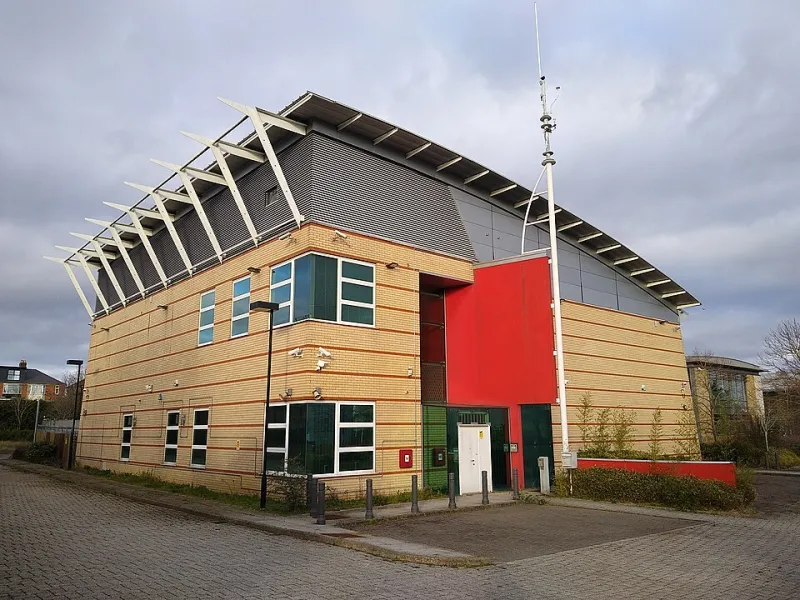
Photo: Colin, CC BY-SA 4.0, via Wikimedia Commons
An office lease is usually negotiated around rent, break clauses and repairing obligations. Communications infrastructure rarely receives the same scrutiny, yet it is one of the few parts of a building that can be difficult to replace and expensive to unpick. In 2026, with more business services delivered over IP, a weak communications inheritance can affect everything from telephony and payment systems to access control and cloud applications.
The practical risk is simple: a fast broadband quote is not the same as a workable comms setup. Availability at a postcode does not prove that fibre can enter the building, that a riser has capacity, or that the landlord will permit the work. Tenants should therefore treat communications as part of due diligence, not as an administrative task after the keys are handed over.
The quote is not the connection
Suppliers can be remarkably good at telling you what they could provide. They are less able to tell you what your building will allow. A quote may assume a standard installation route, a suitable entry point and permission to use existing ducts. If any of those assumptions fail, the commercial terms can change quickly.
Ask for the proposed service to be described in building terms: where the circuit enters, which riser it uses, where the termination equipment sits and who authorises access. If the answer is vague, the quote is not yet a plan.
Begin at the riser, not the router
The riser is the vertical route that carries cabling between floors. It is often shared, sometimes congested and occasionally locked without a clear key-holder. Before committing to a lease, ask to see the route from the building entry point to the floor you intend to occupy. Check whether there is spare capacity, whether fire-stopping is intact and whether new cabling would obstruct other services.
A building manager may describe the riser as available, but availability is not the same as suitability. Photographs, drawings and a site walk with the landlord’s representative are more useful than a verbal assurance.
Wayleaves, consents and the landlord’s paper trail
A wayleave is permission to install and maintain apparatus on or through land or property. In multi-tenant buildings, the landlord may also require a licence to alter before cabling or equipment is installed. Existing permissions may belong to a previous tenant, may have expired, or may not extend to your proposed supplier.
Request copies of relevant wayleaves, licences and building rules. Ask whether the building has an exclusive supplier arrangement, whether any provider has registered apparatus in the building, and what notice is required for access. Also check how communications costs are treated in the service charge. A tenant can inherit an obligation to contribute to shared infrastructure without realising it.
Shared cabling and the question of ownership
Existing cabling is not automatically yours to reuse. It may be landlord-owned, left behind by a previous occupier, or part of a supplier’s network. Even where reuse is possible, poor labelling and missing test results can turn a simple migration into a long investigation.
Ask for as-built drawings, patch schedules and test results where they exist. If they do not exist, budget for testing and labelling before you rely on the cabling for business-critical services. Clarify who is responsible for removal or remediation at the end of the lease; abandoned cable can become a dilapidations issue.
Power, cooling and the unglamorous details
A communications room needs more than a locked door. It needs suitable power outlets, ventilation, physical security and enough space for the equipment you actually intend to install. A small cupboard that once held a single switch may not support a rack, uninterruptible power supply and additional circuits.
Check access arrangements too. If engineers can only attend outside business hours, or if keys are held by a third-party concierge, that affects maintenance and fault response. These details belong in the lease pack or a side letter, not in an informal email that disappears when staff change.
A pre-signature checklist
- Confirm the building entry point and the proposed fibre route.
- Inspect the riser for capacity, condition and access.
- Obtain copies of wayleaves, licences and landlord consents.
- Identify who owns existing cabling and whether it can be reused.
- Check power, cooling, security and space in the comms room.
- Confirm service charge treatment for shared communications infrastructure.
- Agree access arrangements for suppliers and maintenance engineers.
- Record who pays for remediation, removal and make-good.
- Ask for a handover pack with drawings, labels and test results.
Document before signature
The strongest position is to settle communications obligations before the lease is signed. Put access rights, remediation responsibilities and handover requirements in the legal paperwork where possible. If the landlord will not commit, record the risk and price it into the decision.
A building’s communications inheritance is not visible in the marketing particulars. It is found in risers, cupboards, wayleaves and the questions a landlord may not have been asked for years. For a UK tenant, an hour spent auditing those details before signature is often more valuable than another round of broadband quotes.