Your Business Number Is an Asset: Treat a Port Like a Property Transfer
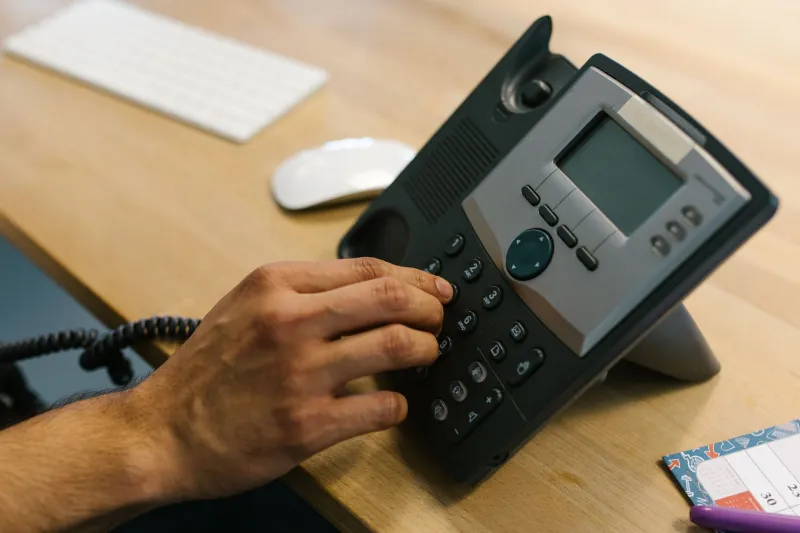
Most UK businesses spend weeks comparing call rates and handset bundles, then sign a contract that says almost nothing about the one item they cannot replace: the number their customers already know. A phone number is not a feature of a service. It is an asset, and it behaves like one — it can be lost through carelessness, held hostage by a supplier, or quietly handed back to a pool of available numbers because a cease order was processed a week too early.
Portability exists to prevent that. Under the general conditions Ofcom sets for communications providers, a customer moving between suppliers is entitled to keep their number, and the process is designed to be led by the provider you are joining rather than the one you are leaving. The regulation is not the difficulty. The difficulty is the administration that surrounds it.
What is actually being moved
A port does not transfer a piece of equipment or a contract. It transfers the routing of a number from one network to another. That distinction matters, because a number is only portable while it is still live on an account somewhere.
Numbers usually found in an SME estate include geographic numbers beginning 01 or 02, UK-wide 03 numbers used for customer service, freephone 0800 ranges, and mobile numbers issued to field staff. Most of these can be ported between providers. What cannot always be moved easily is the arrangement around them: an auto-attendant, a hunt group, a call recording archive, a direct-dial range mapped to individual desks.
Where numbers get stuck
In practice, ports fail for reasons that have little to do with engineering.
- The number sits on a broadband account that is being ceased at the same time, and the cease is processed ahead of the port.
- The account holder on record is a former employee, a defunct limited company, or a marketing agency that bought the number on the business's behalf.
- The address on the account does not match the address given to the gaining provider, so validation fails.
- Nobody ordered the port at all, because the new service was bought as a fresh connection.
- A direct-dial range is ported in part, leaving half the team on a number nobody answers.
None of these are exotic. All of them are avoidable with a short list of questions asked at the right moment.
The questions to ask before signing
Which numbers are in scope, exactly? Ask for the full list in writing, including every direct-dial number, fax line, conference bridge and 03 number. The list should appear in the contract or its schedule, not in an email that will be lost.
Who is the registered keeper of each number? This is a factual question with a factual answer, and it is worth checking against the provider's own records rather than your own assumption.
Is any number bundled with a circuit or a broadband line? If so, the order of operations matters. The port must complete before the old service is ceased, not after.
Who submits the porting request, and by when? The gaining provider should lead. Ask for a named contact and an agreed date in writing, and ask what happens if that date slips.
Does the new contract charge for porting, or set a minimum term on the number itself? A reasonable question, and one that is occasionally answered badly.
Will outbound caller ID present correctly from day one? Customers recognise the number they dial, not the one that calls them. A misconfigured presentation setting can make a legitimate call look like a cold approach.
What happens to the call flows? Greetings, opening hours, routing rules, voicemail-to-email, recording retention. These are configuration, not portability, but they will be rebuilt somewhere and someone should own that task.
What is the plan for the twenty-four hours around cutover? A temporary diversion, a mobile fallback, or a period of dual running is usually cheaper than an afternoon of unanswered calls.
What is the exit process from this new provider? If the answer is vague now, it will be vaguer in three years' time.
Keeping the main line live: a sensible sequence
Order the new service first. Obtain the port date in writing. Do not give notice on the old service until that date is confirmed and, where a gap is possible, arrange a diversion to cover it. On the day, test inbound calls from both a mobile and a landline, check outbound presentation, confirm the registered address for emergency calls, and walk the direct-dial range one extension at a time. Leave the old account open for a fortnight afterwards, then close it deliberately rather than by default.
Two things worth saying plainly
First, portability is a right, not a favour, and it should not be used as a bargaining chip in a renewal negotiation. The contract term and the number are separate matters, and treating them as one is how businesses end up renewing to protect something they never needed to protect.
Second, the cheapest quotation is not always the cheapest outcome. A supplier who can describe their porting process clearly, name the person who runs it, and put dates in writing is offering something of real value, even if the per-minute rate is a fraction higher.
A number that has been in use for a decade carries recognition that no marketing budget easily rebuilds. It deserves the same diligence as a lease.